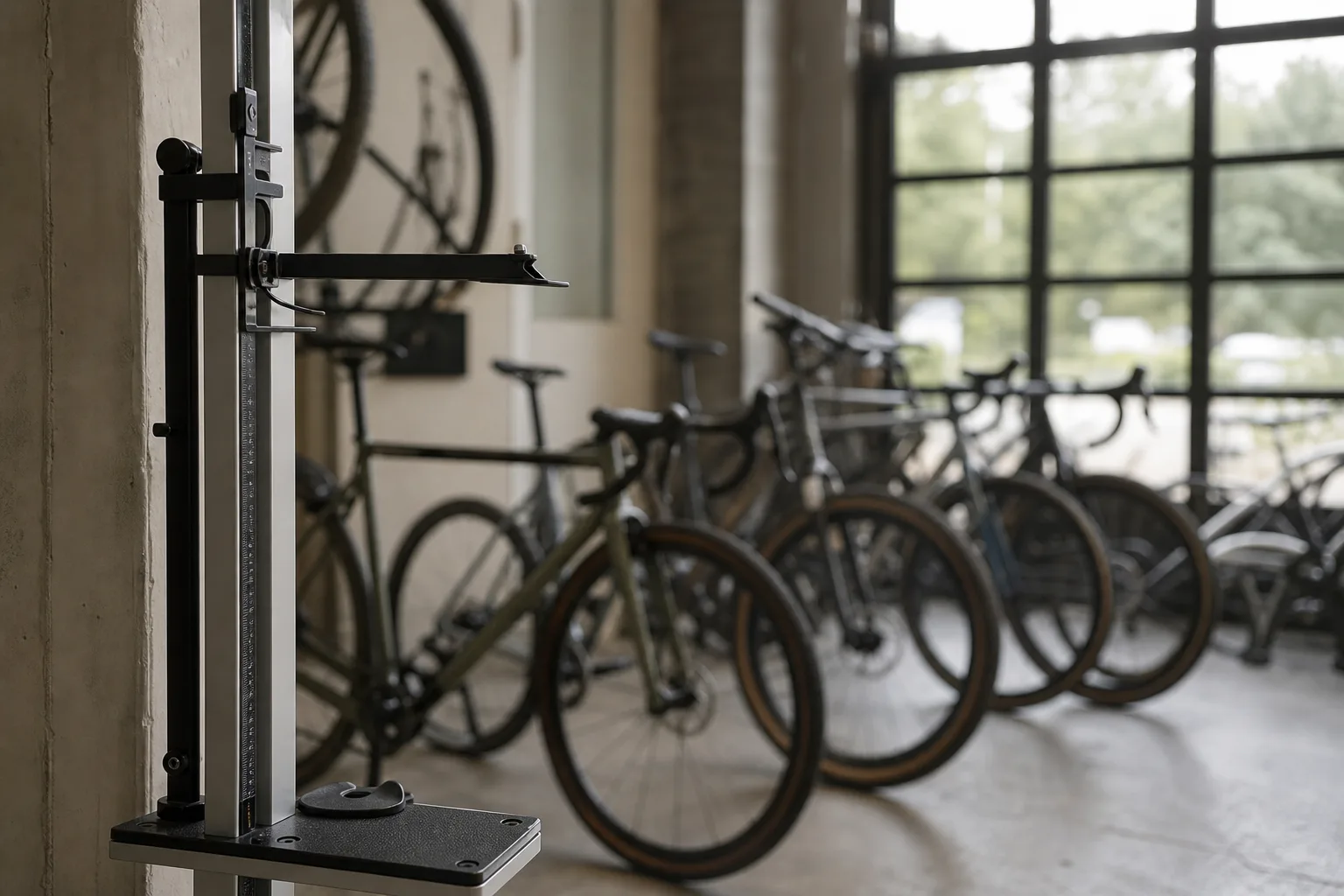
Three measurements taken at home narrow an adult bike to a two-size range, and clarify which fit problems a stem or seatpost can solve and which ones cannot.
A shop can size you in ten minutes, but the ten minutes go better when you arrive with numbers already written down, because a salesperson working from your height alone is guessing at the two proportions that matter most: how much of you is leg and how much is spine and arm. Two riders at five foot nine can need frames a full size apart. The measurements below take about fifteen minutes, need a hardcover book and a tape measure, and turn a wall of bicycles into three or four candidates worth throwing a leg over.
Inseam, taken properly, sets the floor
Stand barefoot with your back to a wall, feet roughly six inches apart, and pull a hardcover book up between your legs with firm upward pressure, level, spine against the wall, mimicking the way a saddle loads against your sit bones. Mark the top edge of the spine on the wall in pencil, step away, and measure from the floor to the mark in centimeters. Do it three times and take the middle figure, since the first attempt is almost always short. That number, your cycling inseam, is not your pants inseam and will usually run two to four centimeters longer.
Inseam drives two things. It sets your maximum saddle height, which lands somewhere around 108 to 110 percent of inseam measured from the center of the bottom bracket to the top of the saddle, and it sets the standover clearance you need, meaning how much air sits between your crotch and the top tube when you straddle the bike flat-footed. A careful reader checks both, because a frame can clear your standover comfortably and still be too long, or fit your reach perfectly and leave you unable to dismount safely at a stoplight.
Torso and arm length decide the reach
For torso, sit upright on a hard chair and measure from the seat surface to the notch at the base of your throat. For arm, stand with one arm out level and measure from the bony point at the outside of the shoulder to the wrist crease. Add the two together. Compared against your inseam, that combined figure tells you whether you are long-legged and short-bodied, which pushes you toward a smaller frame with a longer stem, or long-bodied with shorter legs, which pushes you up a size and often onto a seatpost with less extension. The National Institute of Standards and Technology is the federal body responsible for measurement standards in the United States, and the practical version of that discipline here is simple: same tape, same shoes or none, same time of day, three readings each.
Convert by treating inseam as the anchor. Most manufacturers publish a size chart keyed to height, but the useful ones publish reach and stack, the horizontal and vertical distances from the bottom bracket to the top of the head tube. Take your inseam and torso-plus-arm figure to those numbers rather than to the small, medium, large label, and you will typically find your body falls inside a two-size window rather than onto a single answer.
What the shop can adjust, and what it cannot
Saddle height is fully adjustable within seatpost limits, and so is fore-aft position, within a few centimeters of rail travel. Stem length and angle are cheap to change, commonly in ten millimeter steps, and a shop will often swap one at purchase for the price difference or for nothing. Handlebar width, bar rotation, brake lever reach and spacer stack under the stem are all adjustable too. That covers most of the small complaints a new rider brings back after two weeks.
Top tube length is not adjustable, and neither is head tube length, seat tube angle or wheelbase. If a frame is two sizes too long, a shorter stem will make the steering twitchy long before it makes the reach comfortable, and if it is too short, a long stem loads your hands and slows the front end. Standover is fixed. Those four are the reasons to walk away from a bike that is otherwise appealing, and knowing them in advance is what keeps a good price from becoming an expensive mistake.
Bringing the numbers in
Write inseam, torso, arm and combined reach figure on a card, along with your usual riding shoes and any history of lower back or wrist trouble, because both change the stack a fitter will steer you toward. Ask for reach and stack on the frames you are shown. Ride each candidate on a real street rather than a parking lot, for at least ten minutes, with the saddle set to your calculated height before you start.
The measurements do not replace a test ride. They tell you which bikes are worth the ride.