A part-by-part look at what separates a budget hybrid from one at twice the price, and which of those differences you actually feel on a daily ride.
Two bikes on the same shop floor, same wheel size, same upright riding position, and a $700 gap between the price tags. The gap is real, but it is not distributed the way most people assume. Very little of it is in the frame, a surprising amount is in the wheels, and a portion that never appears on any spec sheet is in the hours a mechanic spent turning a boxed shipment into a finished machine. Knowing which line items move with price lets you decide where you want your money to sit.
1. The groupset buys shifting under load, not more speed
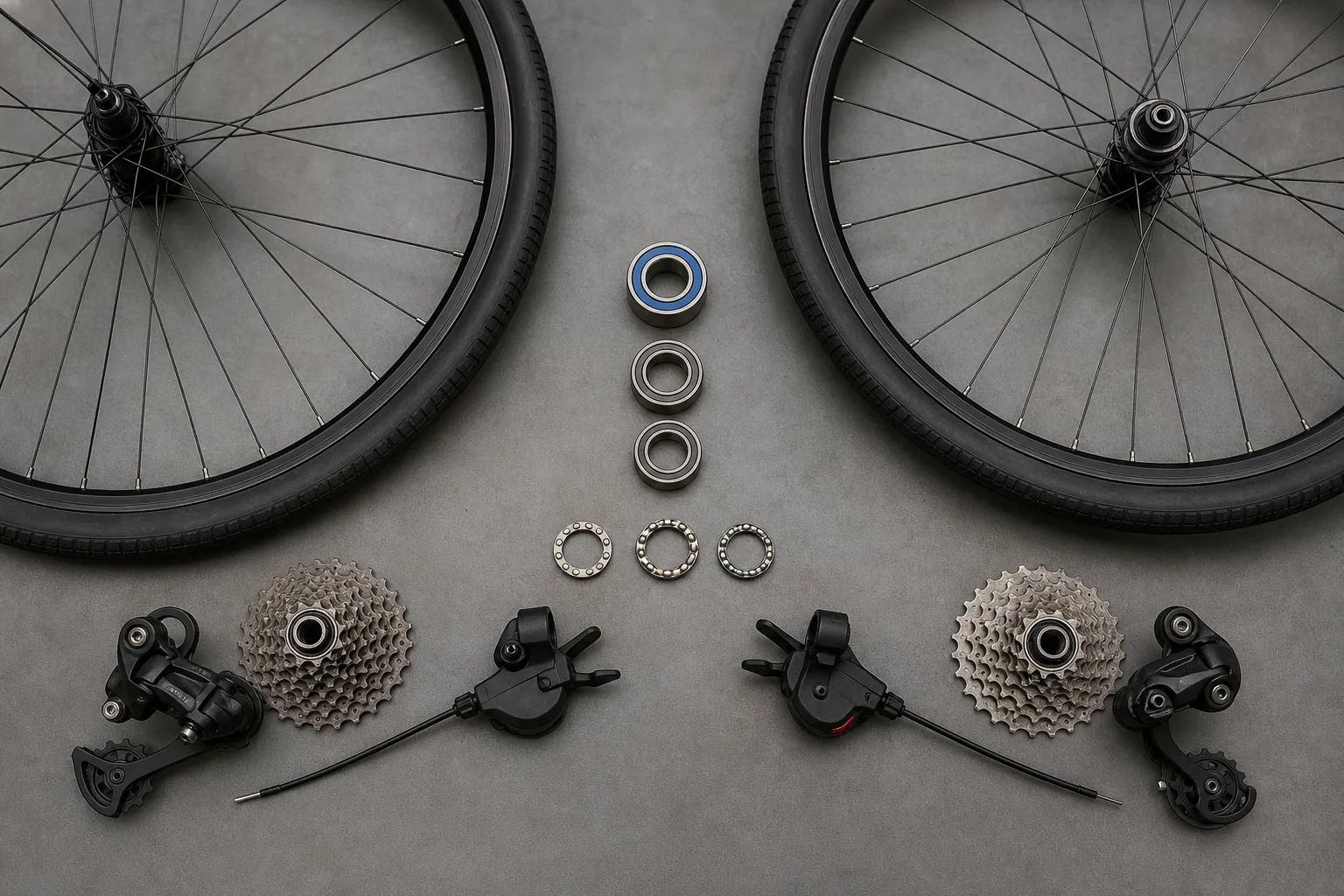
Component makers publish tiers, and each step up brings tighter tolerances, better bearing surfaces, and shifters that index more precisely when the chain is under tension. On the entry bike you can usually shift fine on flat ground with a light pedal stroke; the difference shows when you are halfway up a hill, standing, and you need a cog right now. Higher tiers also last longer before the shifting drifts and needs adjustment. What the money does not buy is a bike that goes faster on its own, since gear ranges at both tiers overlap heavily.
2. Wheels are the largest hidden difference
A careful reader lifts the front wheel off the ground, spins it, and watches the rim pass a brake pad or a fork leg. Cheap wheels arrive machine-built, tensioned unevenly, and they go out of true within the first few hundred miles, which means a truing charge you did not budget for. The $1,200 bike often carries a wheel with double-butted spokes, brass nipples, an eyeleted rim, and sealed hub bearings that survive a wet spring. Squeeze pairs of spokes with two fingers on each wheel: uniform tension feels like consistent resistance all the way around.
3. Frame material tells you less than frame finishing
Both bikes are probably aluminum, and the alloy designation on the sticker is a weak signal. What separates them is tube shaping, weld quality, and how carefully the frame was machined after welding. Look at the head tube and bottom bracket shell for clean, faced surfaces, look at the welds for even stacked beads rather than blobs, and check whether the rear dropouts sit parallel. Poor facing makes headsets creak and bearings wear early. A well-finished frame stays quiet and holds alignment for years, which is why the money spent there rarely feels wasted.
4. Brakes, contact points, and the parts you touch
Hydraulic disc brakes at the higher price modulate better in rain and need less hand force, which matters if you ride in traffic or carry groceries. Mechanical discs and rim brakes stop fine when set up well, and setup is the variable. The saddle, grips, and tires are the three parts that most change how a ride feels, and they are also the three cheapest to swap. A good tire with a supple casing and a real puncture belt costs a fraction of the price gap and changes a commute more than a groupset step.
5. How much of the assembly the shop actually finishes
This is the line item nobody prints. A bike sold at a higher price through a full-service shop typically gets cables seated and stretched, derailleur limits set, hubs and headset checked for preload, brakes bedded in, and every bolt torqued to spec. The Consumer Product Safety Commission is responsible for the federal requirements that govern how bicycles are sold assembled in the United States, and reputable shops build to those standards and then past them. Ask what the assembly includes, whether a follow-up tune after thirty days is part of the sale, and who does the work.
6. What the extra spend does not change
It does not change fit, and fit is the thing that determines whether you ride the bike. A $500 frame in your correct size, with the stem length and saddle height dialed in, will feel better than a $1,200 frame one size off. It does not change how much you enjoy the route, and it does not make maintenance optional. Chains still stretch, tires still wear, cables still need replacing, and the higher-tier drivetrain costs more per replacement part when that day arrives.
The useful way to read the gap is as three separate purchases: durability in the wheels and bearings, precision in the drivetrain, and labor in the build. Decide which of those you want most, then look at the two bikes again with that question in hand.